Stock Market Basics
How China's Silver Trade Policy Shapes Global Silver Prices
Feb 13, 2026
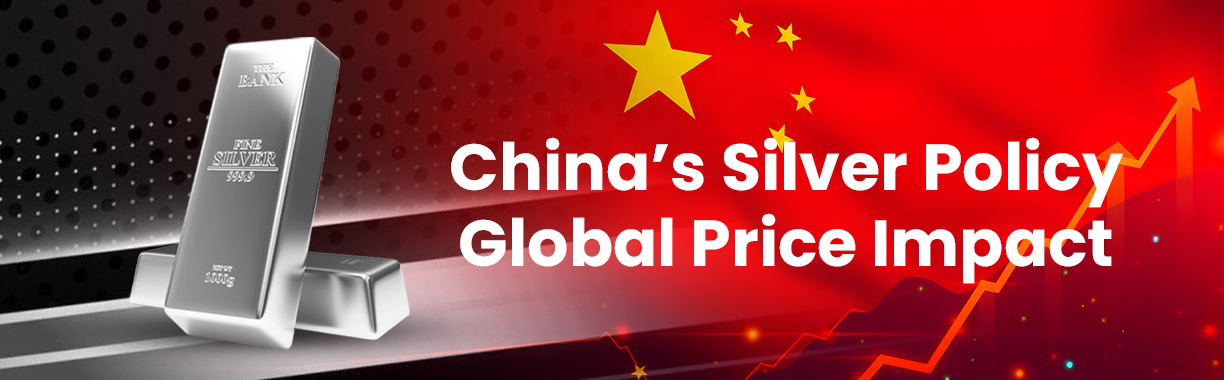
Silver is often seen as a quiet cousin to gold, but in reality, it is one of the most policy-sensitive commodities and very volatile in the global market. Its price responds not only to inflation expectations and investor sentiment, but also to trade decisions taken far beyond commodity exchanges. Over the past year, regulatory signals from China have emerged as a key influence, reshaping how traders, manufacturers, and government's view silver supply. To understand recent price movements and future risks, it is important to look at how China's trade stance feeds into the global silver ecosystem.
Why China Matters in the Silver Market?
China is at the centre of refining, processing, and distribution networks of silver that feeds its global industry. When Beijing adjusts its silver trade rules, the impact travels quickly through futures markets, physical supply chains, and eventually, to the cost to the consumer. In this article, we will explore how those policies work, why markets react so strongly, and what it means for global and Indian investors.
China's Role in the Global Silver Ecosystem
To understand price reactions, it helps to start with China's position. China refines a significant share of the world's silver and is deeply embedded in the manufacturing of devices and equipment from electronics and solar panels to electric vehicles and medical equipment.
When China's silver export rules tighten, overseas buyers face uncertainty about availability, delivery timelines, and cost. Even if the actual volume of silver does not fall immediately, the risk of disruption is often enough to push prices higher. Commodity markets tend to price expectations faster than realities.
What Changed in China's Silver Trade Policy?
Recent policy signals suggest stricter oversight on silver exports, placing the metal under controls similar to other strategically sensitive resources. According to recent China silver export news, the changes include:
- Increased documentation and approvals for overseas shipments
- Closer monitoring of end-use industries
- Alignment of silver trade oversight with critical minerals policy
These measures do not amount to an outright ban. However, they may reduce flexibility around exporting and bring some administrative friction, which can lead to markets interpreting a low or slow supply of silver.
How Policy Translates into Price Volatility?
Silver prices are influenced by physical demand and financial positioning. Policy changes affect both channels simultaneously. When traders anticipate restrictions in China's silver export rules, three things typically happen:
- Futures buying increases as investors hedge against potential shortages.
- Physical premiums rise, especially for fast and immediate delivery of silver.
- Volatility expands as margin requirements and speculative positions adjust; you will see high volatility.
It can explain why prices can jump sharply even when global inventories appear adequate on paper.
Industrial Demand Amplifies the Impact
Unlike gold, silver has a large industrial footprint. Solar energy, semiconductors, and electric mobility all rely on silver's conductivity and durability. When policymakers frame silver as strategically important, industrial buyers rush to secure supply.
If there are China’s silver restrictions, manufacturers outside of China may need to diversify how they source silver or hold larger inventories. These responses increase near-term demand pressure, reinforcing the price strength of silver.
Policy Shock vs Market Reaction
| Policy Signal from China | Immediate Market Response | Medium-Term Effect |
|---|---|---|
| Tighter export controls | Futures buying spikes | Higher average prices |
| Added compliance checks | Delivery delays feared | Physical premiums rise |
| Strategic classification | Investor risk hedging | Increased volatility |
This dynamic shows why even modest regulatory changes can lead to disproportionate price moves.
Implications for India's Silver Market
India is one of the world's largest consumers of silver, buying around 4000 tons of silver annually. It is used in different aspects, spanning from jewellery, investment bars, to industrial use. Any sustained shift in China's silver export conditions can influence India in several ways:
- Import costs may rise due to higher global benchmarks.
- Domestic prices could see faster pass-through during volatile periods.
- Industrial planning becomes harder for sectors like electronics and renewable energy.
For Indian participants, the issue is not just price direction, but price stability.
Can Prices Fall Again?
The answer depends on multiple factors. Even if policy enforcement turns out to be less restrictive than feared, markets rarely reverse immediately. Positions need to unwind, inventories must rebuild, and confidence has to return.
If global growth slows sharply or industrial demand weakens, silver could retrace. However, as long as China's silver export policy remains uncertain, downside moves may be uneven rather than smooth.
What Investors Should Watch Next About Silver?
Here are some indicators you should monitor:
- Official clarification from Chinese trade authorities
- Export volume data over successive quarters
- Industrial demand trends are in solar and electronic devices
- Currency movements, particularly the US dollar
Together, these signals will shape how the market continues to price policy risk.
Conclusion
China's approach to silver trade has moved from being a background factor to a primary driver of global pricing dynamics. If you are an investor or a consumer buying silver products, knowing how Chinese laws change around Silver export can help you make many decisions while buying, as it can ripple through markets.
At Indiabulls Securities Limited, we encourage readers to follow global commodity developments closely, assess risk carefully, and align investment decisions with their financial goals. Staying informed is the first step for you to take toward navigating silver's volatility with confidence.
Frequently Asked Questions
1. Is silver now considered a strategic metal globally?
Many countries are reassessing silver's importance due to its industrial applications, especially in clean energy and technology.
2. Do export controls always mean shortages?
Not necessarily, the controls often signal caution and oversight rather than an immediate supply cut.
3. How fast do global prices react to policy news?
Financial markets can react within hours of the news becoming public, though the physical supply impacts may take months to be noticed.
4. Should retail investors track commodity policy news regularly?
Yes. Policy decisions can influence prices as much as economic data, especially for metals linked to industry.
Disclaimer: The contents herein are only for information and do not amount to an offer, invitation or solicitation to buy or sell securities or any other financial product offered by Indiabulls Securities Limited (formerly Dhani Stocks Limited / DSL). The content mentioned herein is subject to updation, completion, amendment without notice and is not intended for distribution to, or use by, any person in any jurisdiction where such distribution or use would be contrary to law or would subject Indiabulls Securities Ltd. (formerly Dhani Stocks Ltd. / DSL) to any licensing or registration requirements. No content mentioned herein is intended to constitute any investment advice or opinion. ISL disclaims any liability with respect to accuracy of information or any error or omission or any loss or damage incurred by anyone in reliance on the contents herein. This blog is based on information obtained from public sources and sources believed to be reliable, but no independent verification has been made about its accuracy or its completeness is guaranteed. This content mentioned in this blog is solely for informational purpose and shall not be used and/or considered as an offer or invitation or solicitation to buy or sell securities or other financial instruments. ISL will not treat recipients as customers by virtue of their receiving this report. The securities / Mutual Fund units (if any) discussed and opinions expressed in this blog/report may not be suitable for all investors. Such investors must make their own investment decisions, based on their investment objectives, financial positions and specific needs. ISL accepts no liabilities whatsoever for any loss or damage of any kind arising out of the use of this report. Past performance is not necessarily a guide to future performance. Investors are advised to see Risk Disclosure Document to understand the risks associated before investing in the securities markets. ISL may have issued other blogs that are inconsistent with and reach different conclusion from the information presented in this blog.
Indiabulls Securities Limited (formerly Dhani Stocks Limited) is a Mutual Fund Distributor registered with ‘Association of Mutual Fund of India’ (AMFI) vide ARN number ARN-160411. Corporate Identification Number: U74999DL2003PLC122874; Registered office address: A-2, First Floor, Kirti Nagar, New Delhi - 110008. Tel.: 011-41052775, Fax: 011-42137986.; Correspondence office address: Plot no. 108, 5th Floor, IT Park, Udyog Vihar, Phase - I, Gurugram - 122016, Haryana. Tel: 022-61446300. Email: helpdesk@indiabulls.com