Inflation
Digital Gold vs Physical Gold: What's Best for an Inflation Hedge?
Nov 27, 2025
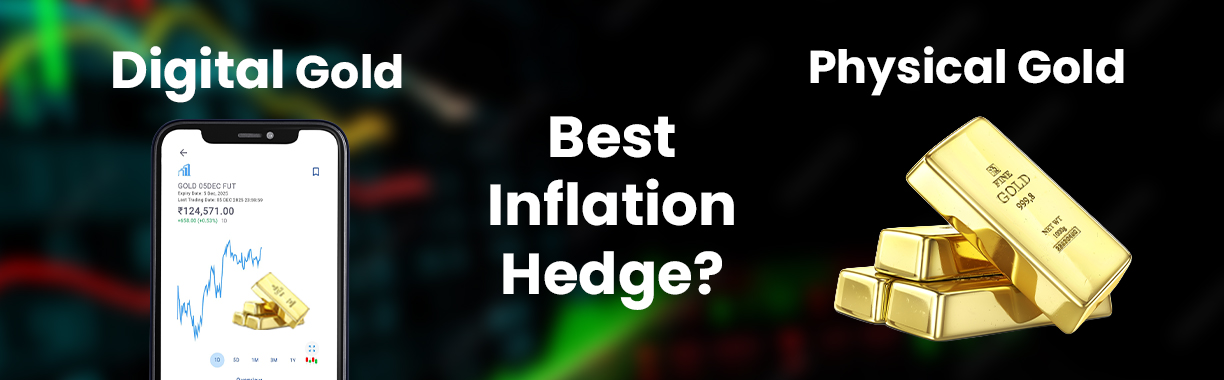
Indians have thought of gold as a safe place to invest their wealth when prices rise and currencies lose value. As with you, everyone was to preserve or grow their wealth during periods of inflation, many people look for assets that can protect their wealth. Traditionally, physical gold, such as coins, bars, and jewellery, has been the go-to choice. However, with the rise of technology-driven investing, digital gold has become a popular alternative. To help you understand how these two options compare, this article explores Digital Gold vs Physical Gold, how each works, and what factors matter most when using gold as an inflation hedge.
Understanding Why Gold Is an Inflation Hedge
Inflation reduces the value of money over time. When everyday goods become more expensive, your cash savings buy less. Gold, however, tends to hold its value because it is a finite resource, widely recognised, and globally traded. People often turn to gold as a store of value when economic conditions become uncertain.
Both digital and physical forms of gold offer exposure to the price of gold. Yet, they differ in convenience, storage, liquidity, and accessibility. Comparing Digital Gold vs Physical Gold can help you decide which aligns better with your needs during inflationary periods.
What Is Digital Gold?
Digital gold has allowed you to buy gold online in small or large quantities. You do not hold the gold physically; instead, a trusted service provider stores it on your behalf in secure vaults. The value of your holdings moves in line with live gold prices.
Digital gold has grown in popularity because it removes the challenges of storing, handling, and transporting physical gold. It also provides an easy way for beginners to buy very small amounts without needing large savings upfront.
What Is Physical Gold?
Physical gold refers to gold you can touch, bars, coins, and jewellery. It is the traditional form of gold investment and remains the preferred choice for many households. Owning physical gold gives you direct possession of the asset and the freedom to store it in your preferred location.
However, physical gold also brings responsibilities and costs, which become important when comparing Digital Gold vs Physical Gold.
How Digital Gold Performs During Inflation
Digital gold mirrors the market price of physical gold. It means that during high inflation, when gold prices tend to rise, digital gold usually reacts in the same way. Some of the factors that make it appealing during inflation include:
1. Ease of Access
Buying and seeling of digital gold comparitively is simpler and happens instantly gold instantly through various online platforms. This helps investors react quickly to changing economic conditions.
2. No Storage Concerns
The service provider handles storage and security in insured vaults, removing your worries abut the cost and space of keeping gold at home.
3. Transparent Pricing
Digital gold is priced according to live market rates, making it easier to track and understand.
4. Flexible Investment Amounts
You can start with very small quantities, even a few rupees' worth, making it accessible for all budgets.
When evaluating Digital Gold vs Physical Gold, these features may be appealing for individuals looking for convenience and flexibility during inflationary periods.
How Physical Gold Performs During Inflation
Physical gold has a long history of preserving wealth across generations. Its value during inflation comes from its tangible nature and universal recognition. Key advantages include:
1. Tangible Ownership
Many people prefer physical gold as it gives a feeling of security, as the asset is fully under your control.
2. Long-Term Wealth Preservation
Gold jewellery and gold bars are often passed down within families as part of long-term wealth planning.
3. Strong Cultural Acceptance
Physical gold has cultural significance in many Indian households, especially for weddings and festivals.
However, physical gold also presents limitations that influence the Digital Gold vs Physical Gold decision, especially when inflation is high:
- Storage risks and costs for lockers or home safes.
- Making charges and wastage for jewellery, which do not apply to digital gold.
- Lower liquidity, as selling may take time or require visiting multiple jewellers.
Digital Gold vs Physical Gold: Which Is Better for an Inflation Hedge?
Both types of gold can be useful as inflation hedges, but they offer different strengths:
Digital Gold may be more suitable if:
- You want small, flexible, and simple investments.
- You prefer quick buying and selling.
- You do not want the hassle of storage and security.
- You want exposure to gold prices without owning physical metal.
Physical gold may be more suitable if:
- You value holding a tangible asset.
- You are investing for long-term family traditions or cultural reasons.
- You are prepared for the storage and purity checks that come with ownership.
- You want an asset that remains valuable even without digital access.
For inflation hedging, both serve the purpose of protecting wealth. The better choice depends on your personal comfort, goals, and ability to manage practical aspects like storage or online access. In terms of pure inflation protection, digital gold tracks gold prices closely and offers liquidity, while physical gold provides independence from digital systems and has historical trust. Considering Digital Gold vs Physical Gold from a balanced perspective can help you decide based on your financial habits and risk tolerance.
Final Thoughts
Gold continues to be a trusted tool during inflation because of its inherent value and stability. Whether you choose digital or physical gold, both offer exposure to a time-tested inflation hedge. Digital gold brings convenience, transparency, and flexibility. Physical gold offers tradition, tangibility, and emotional value.
Ultimately, your choice should depend on how involved you want to be in managing your investment and what matters most to you, ease of use or physical ownership.
To make a well-considered decision, you can explore the gold-linked investment products offered by Indiabulls Securities Limited (formerly Dhani Stocks Limited) and assess how they fit within your overall strategy.
Disclaimer
"Mutual fund investments are subject to market risks, read all scheme related documents carefully
"Refer to the Risk Disclosure Document to know the risks associated with F&O Trading"
FAQs
1. Can digital gold be converted into physical gold?
Some platforms allow conversion into coins or bars, depending on their policies and minimum quantity requirements.
2. Does physical gold always offer better resale value than digital gold?
Resale value varies. Physical gold may involve deductions for jewellery making charges, while digital gold reflects live market prices.
3. Is digital gold regulated in India?
Digital gold is offered by authorised providers who follow storage and security norms, but it is not classified as a financial security.
4. Can I buy digital gold for long-term wealth planning?
Yes, although long-term suitability depends on storage arrangements by the provider and whether you prefer direct physical possession.
Disclaimer: The contents herein are only for information and do not amount to an offer, invitation or solicitation to buy or sell securities or any other financial product offered by Indiabulls Securities Limited (formerly Dhani Stocks Limited / DSL). The content mentioned herein is subject to updation, completion, amendment without notice and is not intended for distribution to, or use by, any person in any jurisdiction where such distribution or use would be contrary to law or would subject Indiabulls Securities Ltd. (formerly Dhani Stocks Ltd. / DSL) to any licensing or registration requirements. No content mentioned herein is intended to constitute any investment advice or opinion. ISL disclaims any liability with respect to accuracy of information or any error or omission or any loss or damage incurred by anyone in reliance on the contents herein. This blog is based on information obtained from public sources and sources believed to be reliable, but no independent verification has been made about its accuracy or its completeness is guaranteed. This content mentioned in this blog is solely for informational purpose and shall not be used and/or considered as an offer or invitation or solicitation to buy or sell securities or other financial instruments. ISL will not treat recipients as customers by virtue of their receiving this report. The securities / Mutual Fund units (if any) discussed and opinions expressed in this blog/report may not be suitable for all investors. Such investors must make their own investment decisions, based on their investment objectives, financial positions and specific needs. ISL accepts no liabilities whatsoever for any loss or damage of any kind arising out of the use of this report. Past performance is not necessarily a guide to future performance. Investors are advised to see Risk Disclosure Document to understand the risks associated before investing in the securities markets. ISL may have issued other blogs that are inconsistent with and reach different conclusion from the information presented in this blog.
Indiabulls Securities Limited (formerly Dhani Stocks Limited) is a Mutual Fund Distributor registered with ‘Association of Mutual Fund of India’ (AMFI) vide ARN number ARN-160411. Corporate Identification Number: U74999DL2003PLC122874; Registered office address: A-2, First Floor, Kirti Nagar, New Delhi - 110008. Tel.: 011-41052775, Fax: 011-42137986.; Correspondence office address: Plot no. 108, 5th Floor, IT Park, Udyog Vihar, Phase - I, Gurugram - 122016, Haryana. Tel: 022-61446300. Email: helpdesk@indiabulls.com